
What to look for in a coloring book
Four things you can check before buying, none of which appear in the marketing copy.
Coloring books all describe themselves the same way. Fun, creative, perfect for little ones. None of that helps you compare two books, so here is what actually differs between them.
Line weight. This is the single biggest factor for anyone under four, and almost nobody states it. Look at the sample images. If the outline looks like a pencil stroke, it is too thin for a toddler. It should look drawn with a marker.
Objects per page. One large object is a different book from a full scene, even if both are labeled for the same age. Count the elements in the sample.
Page size. 8.5 x 11 inches is the comfortable size for a child's whole hand. Smaller travel formats are genuinely useful in a car and genuinely frustrating at a table.
Subject range. A book of one theme is a gamble unless you already know the child loves it. A book with many themes lets the child show you what they like, and that tells you what to buy next.
What to look for
- Line weight: marker-thick, not pencil-thin
- One object per page for the youngest
- 8.5 x 11 inches
- Enough different themes to find a favorite
The book we would pick
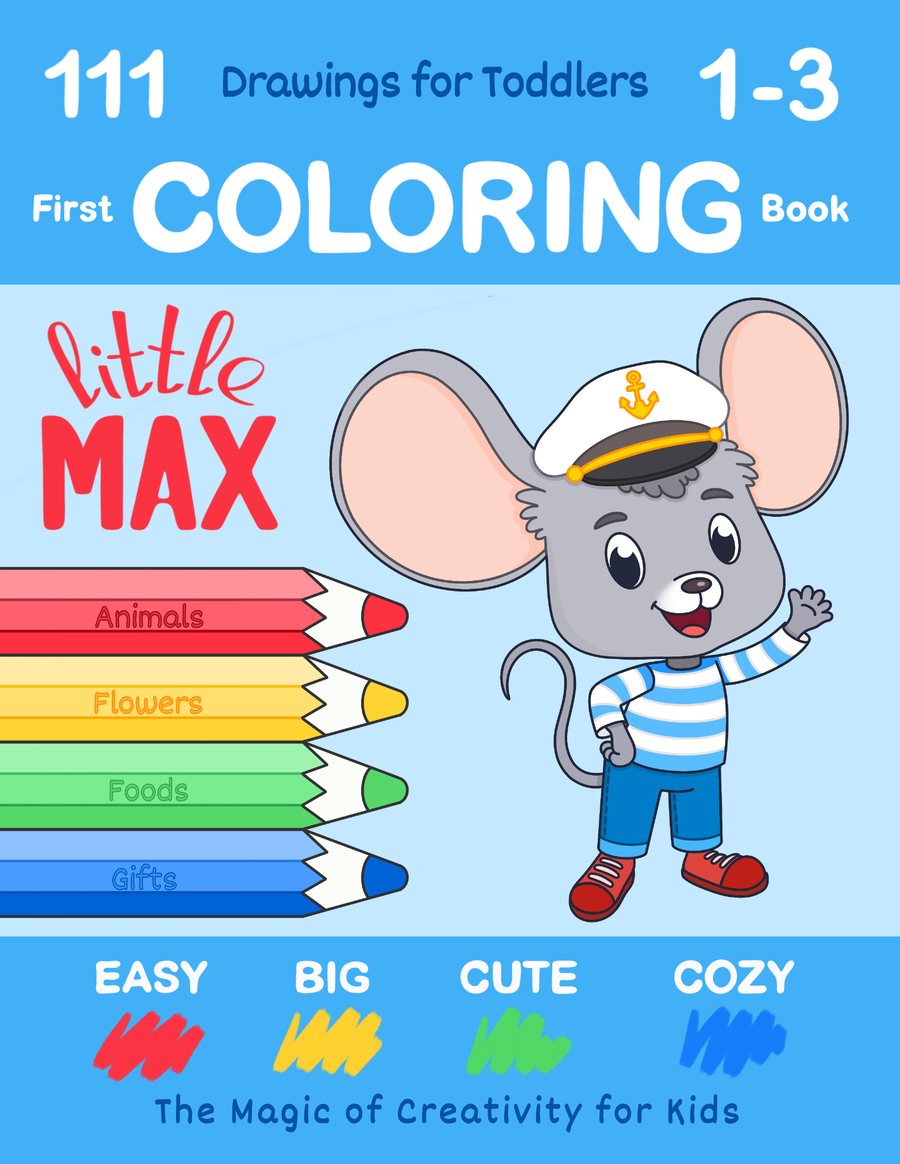
Every one of those four checks, in one book. That is the whole design brief.
First Coloring Book for Toddlers Ages 1-3 by Little Max
A first coloring book made for small hands
Download the printable PDF · $3.99The whole book: all 111 pictures
Choose your paper size:
The PDF is yours to keep and print at home as often as you like. The download link opens right after checkout and also arrives by email.
Prices are set by Amazon and may change.
Questions parents ask
How do I check line weight before buying?
Open the sample images on the product page and look at the outline next to the text. If the outline is thinner than a printed letter, it is thin.
Read next
- How to choose a coloring book for your childThe age printed on the cover describes the book, not your child. Here is what to look at instead.
- Coloring books for toddlers ages 1 to 3A first coloring book has one job: the child finishes the page and wants another one.
- Easy coloring books for adultsA child needs thick lines because they cannot do fine work yet. An adult often wants thick lines because they do not want to.