Directed Drawing for K-2: The Draw, Trace, Write Format
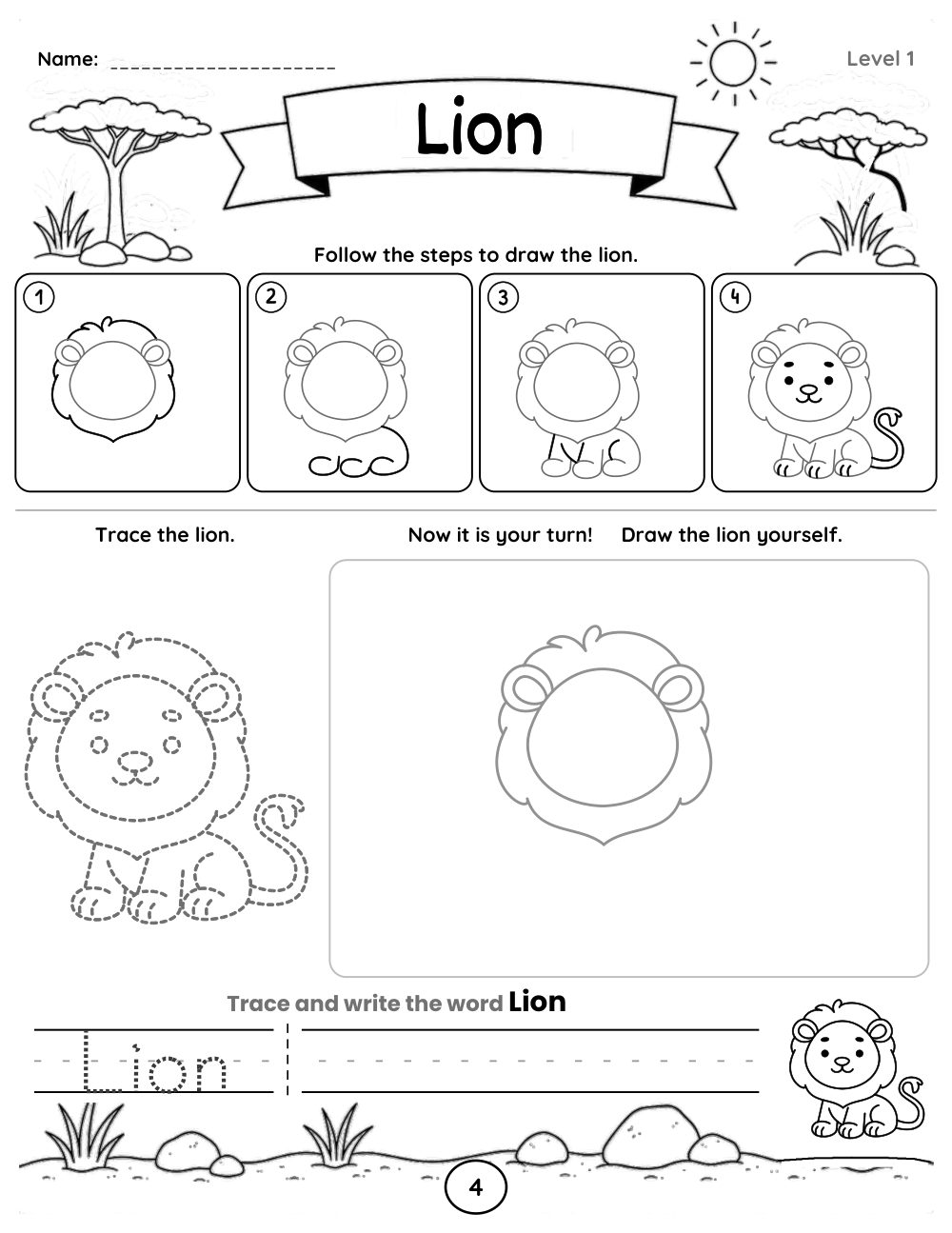
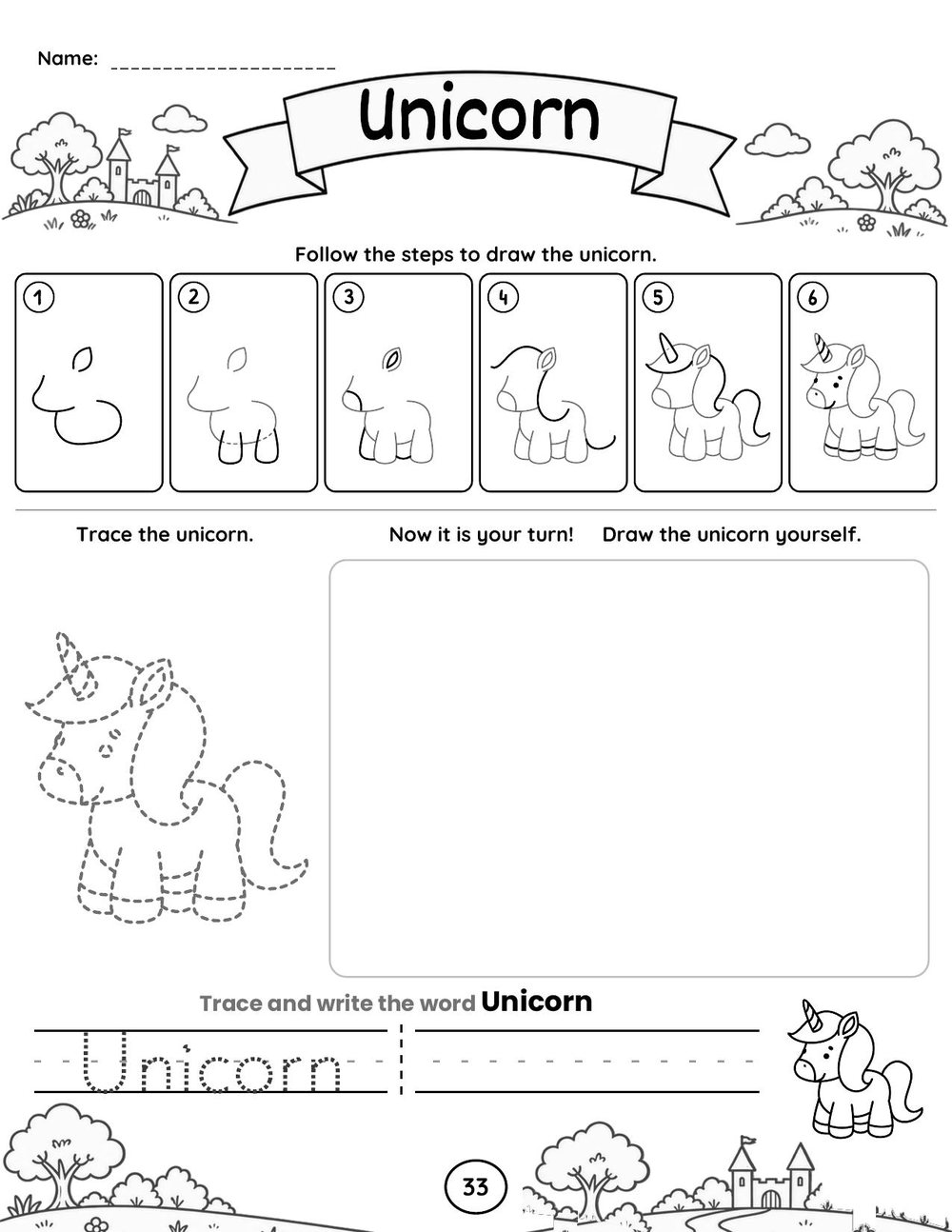
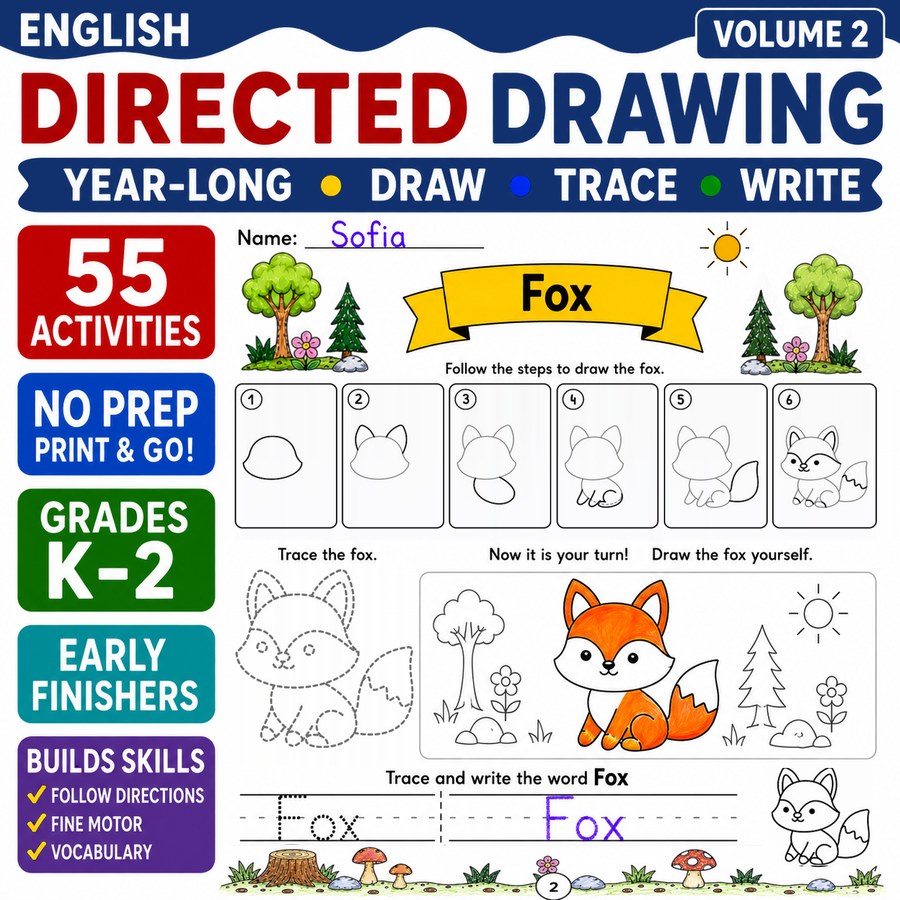
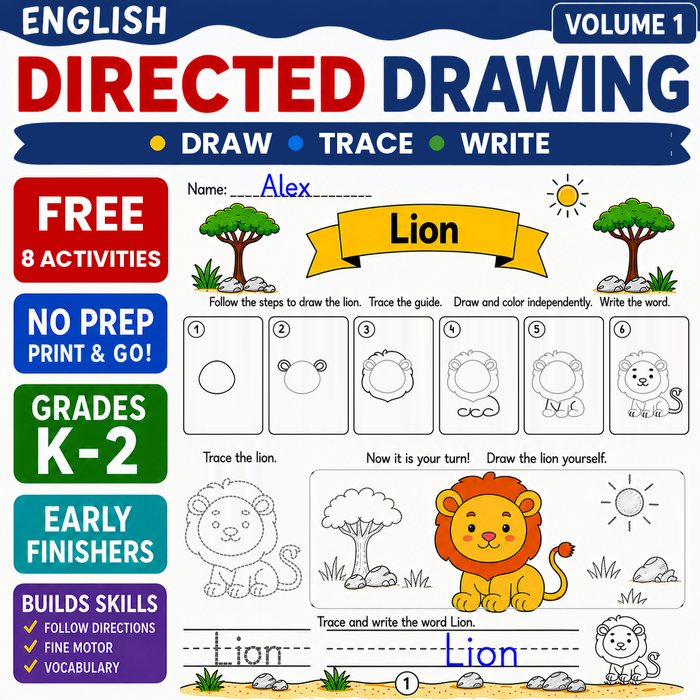
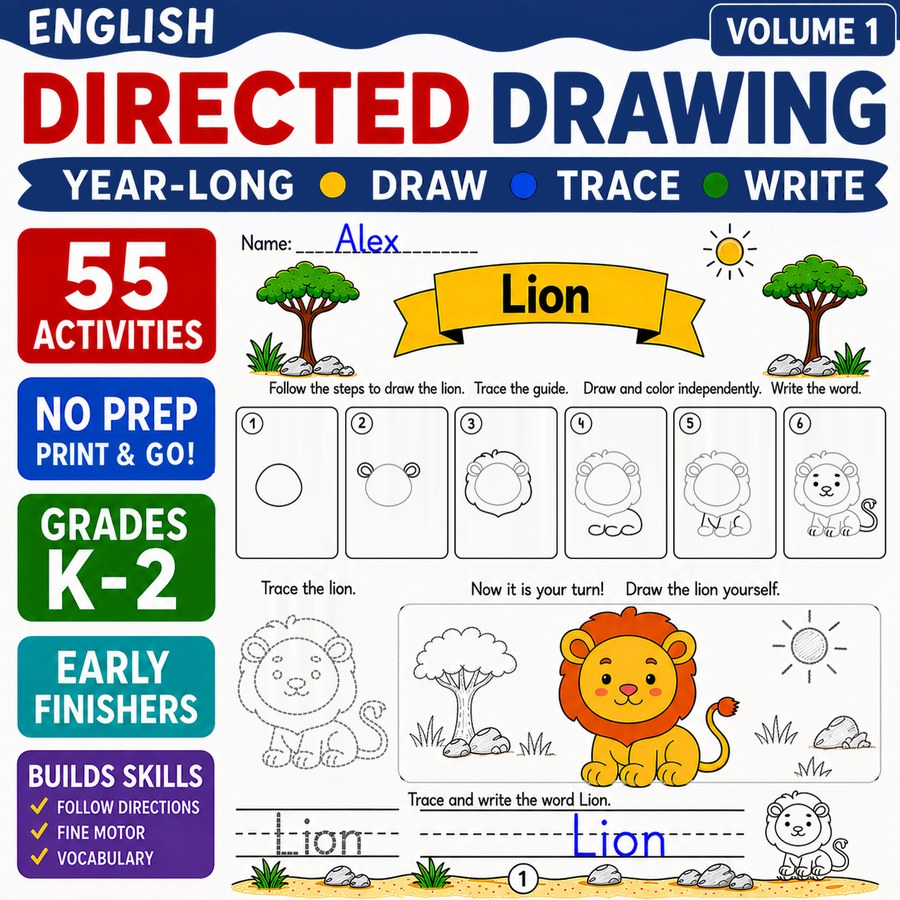
Four stages on one page: follow the steps, trace, draw independently, write the word.

Free 8-activity sample
Get the free sample
Full 55-activity resource
See the full resourceDirected drawing for grades K-2, ages 5 to 8, is an activity in which a student builds a picture from simple lines and shapes by following a step by step visual sequence, traces the finished outline, recreates the drawing independently, and then writes the matching word on primary ruled lines. All four stages fit on a single page and require no preparation: choose an activity, print it, and hand it out. The same draw and write format works in a kindergarten, first grade or second grade classroom and at a homeschool table.
Where this format comes from
Directed drawing itself is a long-established classroom practice.
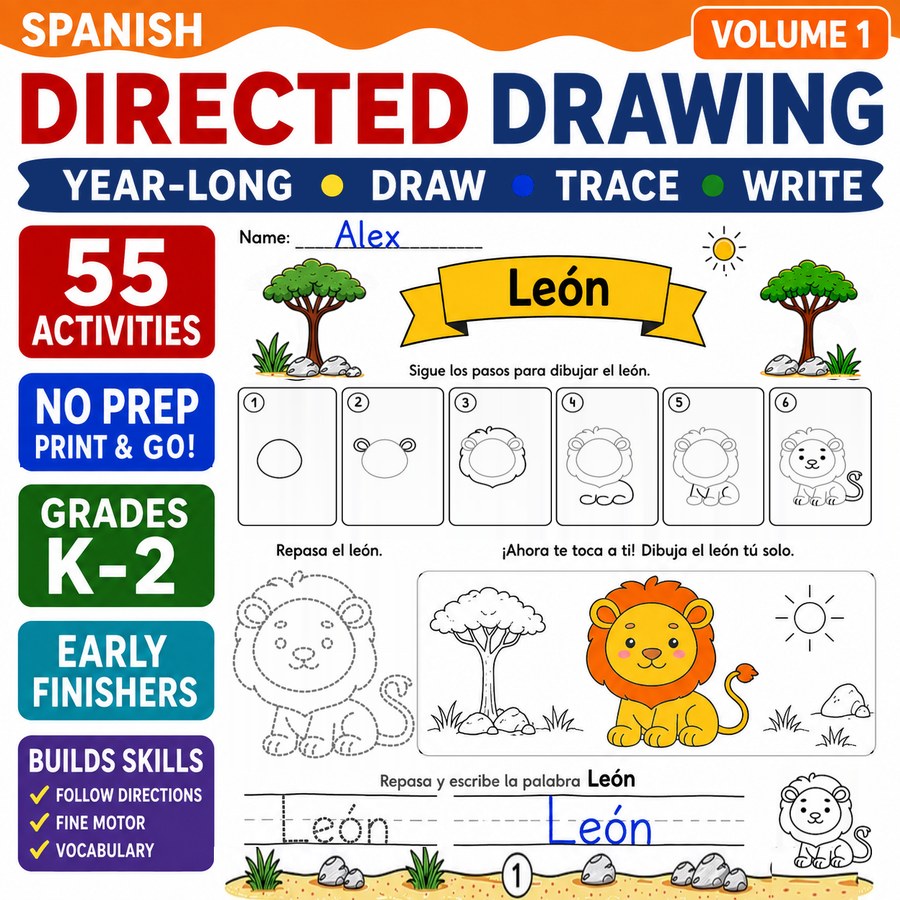
Draw, Trace, Write is a format developed by Ricardo Demi for grades K-2 and built on principles of the ECL method. It brings together a specific page structure, a set order of stages, and a direct link between the drawing and the written word.
Why a step-by-step model helps
For a student who is just beginning to draw, a blank page can be a demanding task. The student has to decide what to draw, where to start, and how to place the drawing on the page, all at once. A visual model breaks that task into small, clear actions.
Tracing provides a bridge between following the visual model and drawing independently. The student first repeats the movement with a guide, then reproduces the shape without one. Handwriting practice follows a similar order: trace the word first, write it independently after.
The four stages
1
Follow the steps
A sequence of images shows how the drawing is built from simple shapes.
2
Trace
The student traces the finished outline along a dashed guide.
3
Draw and color
The student recreates the drawing in an open space and colors it.
4
Trace and write the word
The student traces the word, then writes it on primary ruled lines.
Drawing, fine motor practice, handwriting, and vocabulary all come together in one activity.


What students practice
Fine motor skills
Where it fits in the school day
One page, no setup, and nothing to explain twice once the routine is familiar. The same no-prep page works in a classroom of twenty and at a kitchen table with one child.


What is in the full book
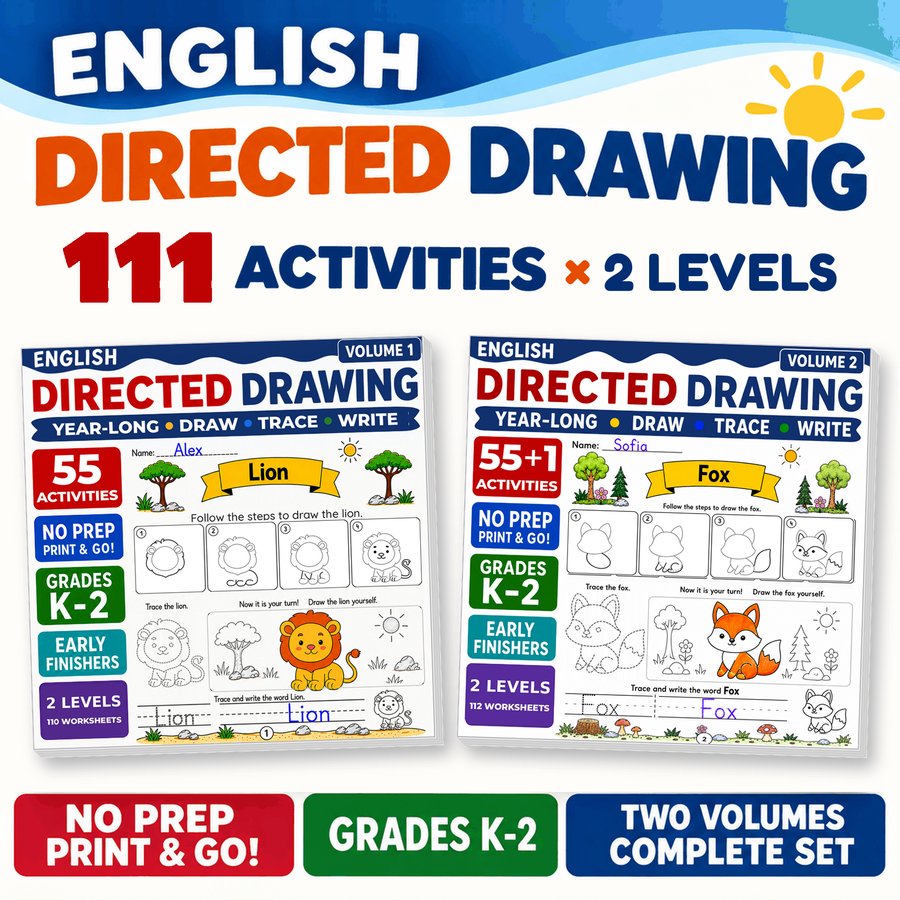
55 full-page directed drawing activities, a teacher page explaining how the activities work, and a two-page illustrated table of contents. 58 pages, US Letter, black and white.
55 activities are enough to use one a week for a full school year and still have pages left over.
Eight themes

About the method
Draw, Trace, Write is built on principles of the Ricardo Demi ECL method that connect creative activity with language development. The full method is documented separately.
About the publisher
Magic of Discoveries LLC, Miami, Florida. Twenty-seven published children's titles in English and Spanish.
Other books from the publisher have been recognized by the Children's Book International Awards in 2025 and the Literary Titan Book Awards in 2024, including two Gold Awards.
Frequently asked questions
Is directed drawing appropriate for kindergarten?
Yes. These activities are designed for grades K-2. Kindergarten students may rely more on the tracing stage, while second graders often move straight from the model to drawing on their own. The same page works at both levels.
How long does one activity take?
It depends on the grade and on whether students color the drawing. An activity can stay short as a warm-up, or run longer if students add a background of their own.
Is any prep required?
No. Print and hand out. There is nothing to cut, glue, or assemble.
Can I use this for early finishers?
Yes, this is one of the main uses. Open space is left around the finished drawing on purpose, so a student can add trees, grass, rocks, or the sun and turn a single figure into a scene. The small themed illustrations and the lettering on the page can also be colored. A student who finishes early has somewhere to keep working without interrupting the rest of the class or waiting on the teacher.
How is this different from a coloring page?
On a coloring page the student fills in someone else's drawing. Here the student draws the subject and then writes the word. The work involves pencil control, sequencing, and vocabulary, not color alone.
What skills does directed drawing practice?
Fine motor skills, handwriting, vocabulary, and following visual directions. Students control the pencil, place the drawing on the page, trace and write the target word, and work independently from the start of the activity to the end.
Does this work for ESL and newcomer students?
Yes. Each page focuses on one word connected to the picture. For a student who is still learning English, the visual guide makes the task clear without relying on lengthy verbal instructions.
Is there a Spanish version?
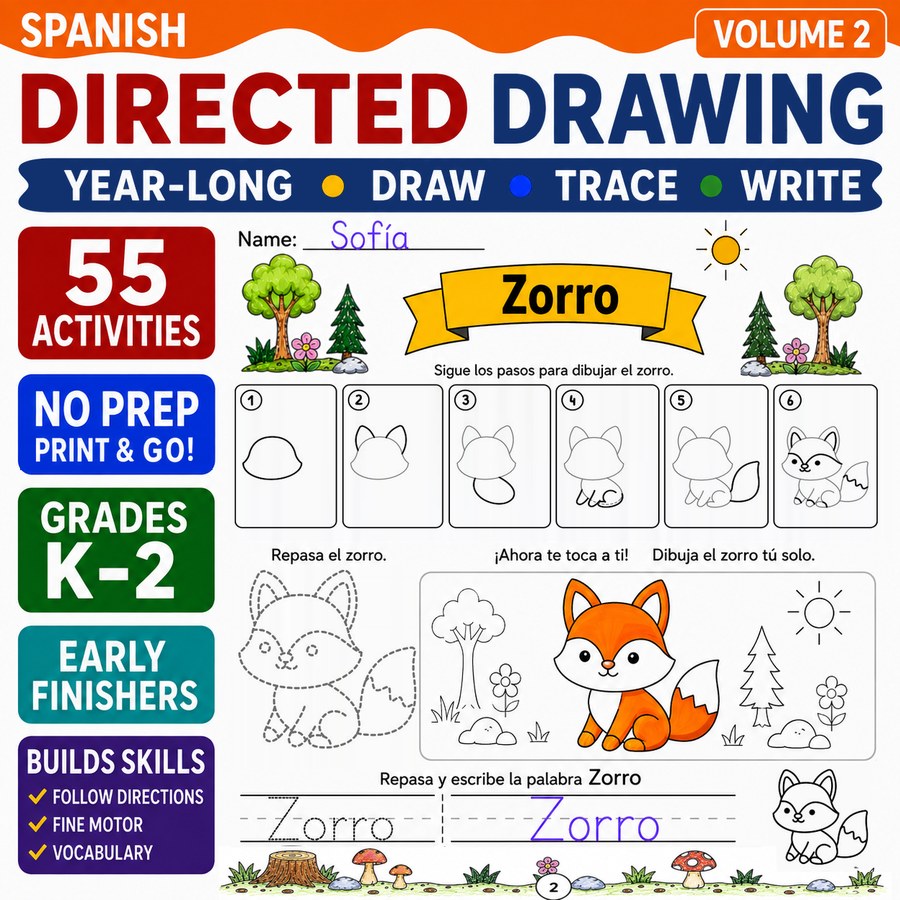
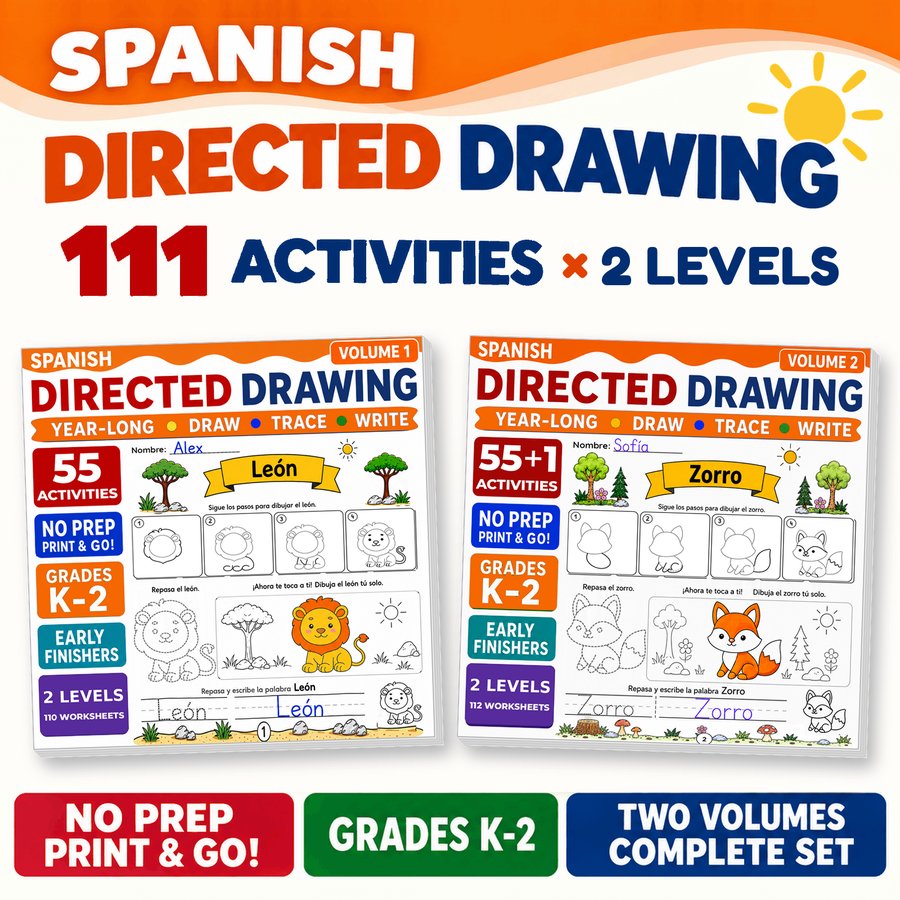
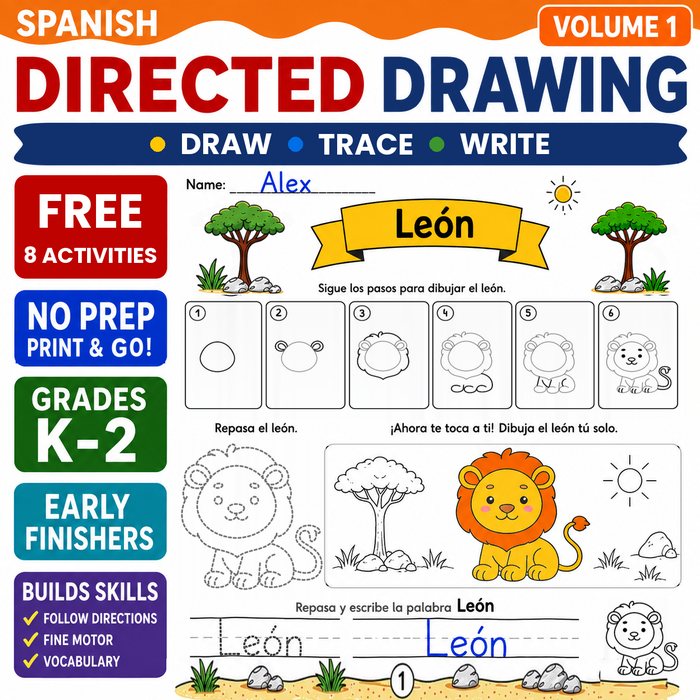
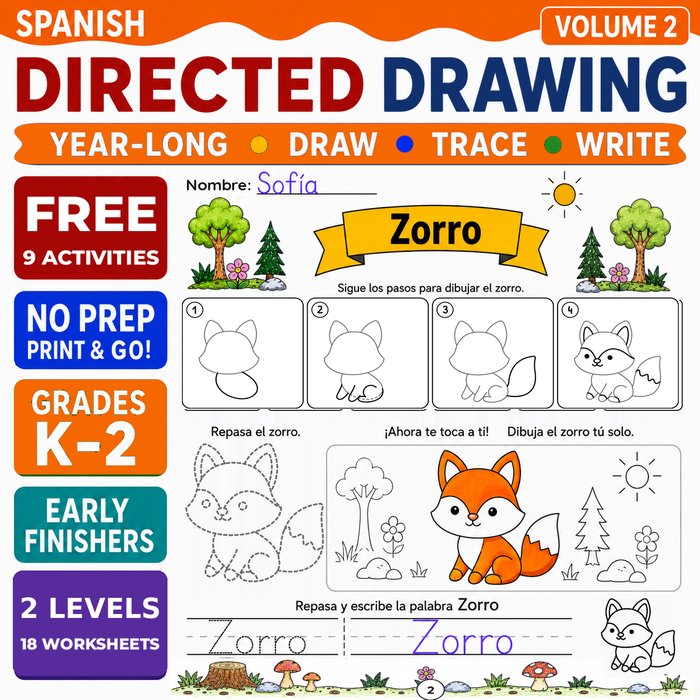
Yes. The same set of activities is published with Spanish vocabulary on every page, for Spanish classes and dual language classrooms. Both editions are linked at the bottom of this page, so a dual language teacher can use the same routine in both languages.
Can I use this for homeschool?
Yes. Nothing about the format assumes a classroom. The full book holds 55 activities, which is one a week for a full school year with pages left over, and a child works through a page alone once the routine is familiar. Many families use one page as part of morning basket or morning time, ages 5 to 8.
Does this work in special education?
Teachers use these pages with students who need a predictable routine and a clear model. Each page follows the same four stages in the same order, the drawing is broken into simple shapes, and a student who is not ready to draw independently can stay on the tracing stage as long as needed. Nothing on the page is timed.
How is this different from a step by step drawing book?
A drawing book stops at the picture. Here the page continues into handwriting: the student traces the finished outline, draws the subject independently, then traces and writes the matching word on primary ruled lines. Drawing and writing sit on the same sheet, which is why these are used in writing centers rather than only at an art table.
What are good directed drawing subjects for a zoo or animal unit?
The Animals theme holds 20 activities, among them a lion, an elephant, a zebra, a monkey, a rhino, a kangaroo and a flamingo, so a teacher can pull a matching page for a zoo unit. Sea Life adds 8 more. The illustrated table of contents shows every drawing with its page number.
Try it in your classroom
Both are available on Teachers Pay Teachers, in English and in Spanish.

Free 8-activity sample
One activity from each theme, with nothing shortened and no watermarks. 10 pages, PDF.
Get the free sample
Full 55-activity resource
The complete Volume 1 collection with a teacher page and an illustrated table of contents. 58 pages, PDF.
See the full resourceRead next
- Directed drawing and writing for K-2Why the drawing and the word belong on the same sheet, and what changes when they do.
- No prep directed drawing for morning work and early finishersFive places a single printed page earns its keep, and what makes a page work without an adult standing over it.
- Fine motor skills, following directions, ESL and special educationWhat a directed drawing page actually practices, and why it holds up with students who need a predictable routine.
- Directed drawing in 15 minutes: a ready routine for K-2A simple plan for the session: what the teacher does and how the time is spent.
- Directed drawing in the first weeks of schoolHow a short repeated activity helps students start a task, work through it and finish it.
Teaching a dual language or Spanish class? The same 55 activities are published with Spanish vocabulary on every page.See the Spanish edition