
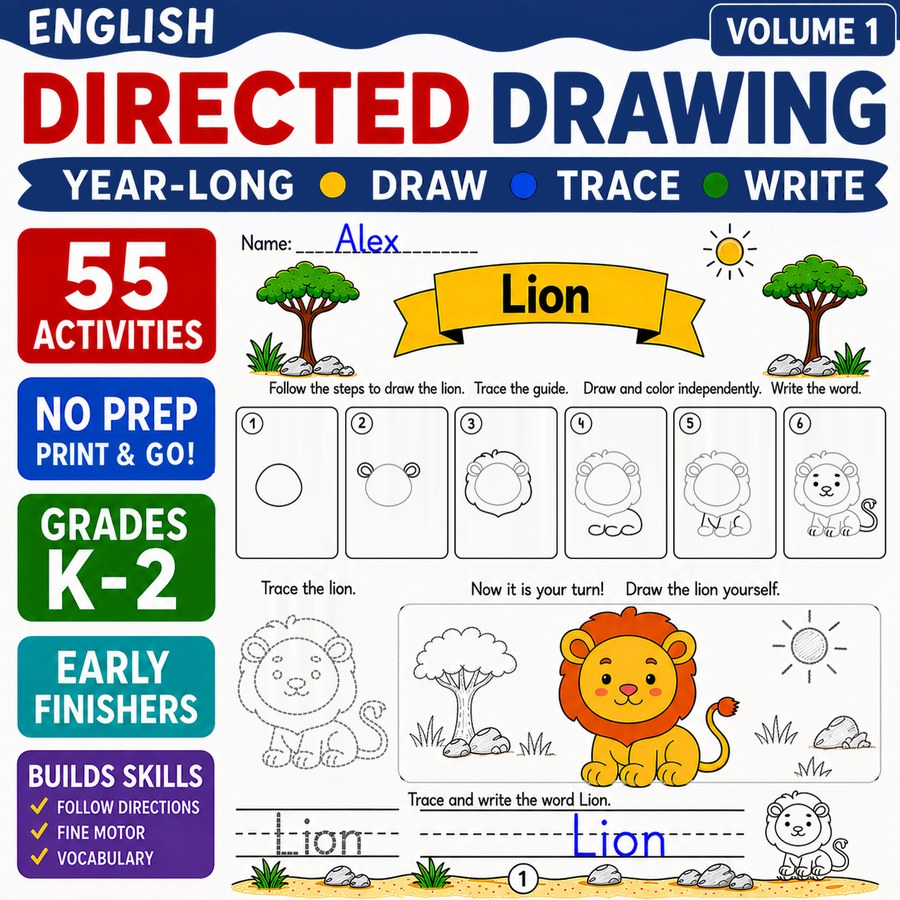
Volume 1
55 drawings · 110 worksheets
$5.99
How a short repeated activity helps students start a task, work through it and finish it.
In the first weeks of the school year, directed drawing can be used for more than drawing skills. Because every sheet is built the same way, it helps establish a clear working routine: students get their materials, move through the steps in order, finish the drawing and clear their space. The subjects and the drawings change, while the order of the work stays familiar, so each session takes the teacher less explaining than the one before.
In the first weeks a teacher is starting instruction and building working habits at the same time: taking out the right supplies, listening to a short direction, beginning without a long wait, and carrying a task through to the end.
Directed drawing suits that work because every sheet is built the same way: build the drawing step by step, trace the outline, draw it independently, trace and write the word, and color or add to the drawing if there is time. The teacher introduces that order once. In the sessions that follow the character or the object changes, and the sequence stays the same.
The drawing can be new every day. What stays the same is the format and the order of the steps, not the subject.
During the first week it helps to choose the simplest subjects and to work through the main steps together with the whole class. The teacher names the stage, students find it on the sheet and repeat it. There is no need to aim for identical drawings or identical speed.
After a few sessions most students need noticeably fewer prompts. They already know where the steps are, where the open space for their own drawing is, and where the line for the word is.
Once the structure is familiar, the sheets can go into the parts of the day where quiet independent work is most useful: morning work, learning centers, the time right after recess, work for students who finished something else early, the end of the day, or the stretch when the teacher is with a small group.
The teacher still watches the room and helps the students who need it, but no longer has to explain the whole task from the beginning each time.
After a few weeks students have a collection of finished pages. It shows progress clearly and gives the teacher something concrete to talk about with families.
From the first days of the year. Choose a simple subject and work through the steps together with the class.
Not necessarily. In the first weeks they can be used daily or a few times a week, depending on the schedule and on what the class needs.
No. The drawings can be different each time. What repeats is the familiar sequence of the work, not the subject.
Show them the main parts of the sheet and do the first activity with a little support. Because the structure repeats, a new student catches up with the rest quickly.
Yes. The finished outline is there to trace, and the word is dashed before it is written. If needed, writing the word independently can be shortened or moved to a later point in the year.
No. It is a short activity that brings together step by step drawing, fine motor practice, independent work, handwriting and vocabulary.
One free activity from each theme, or the full year-long collection. Both on Teachers Pay Teachers.
Words and directions in English.
55 drawings · 110 worksheets
$5.99
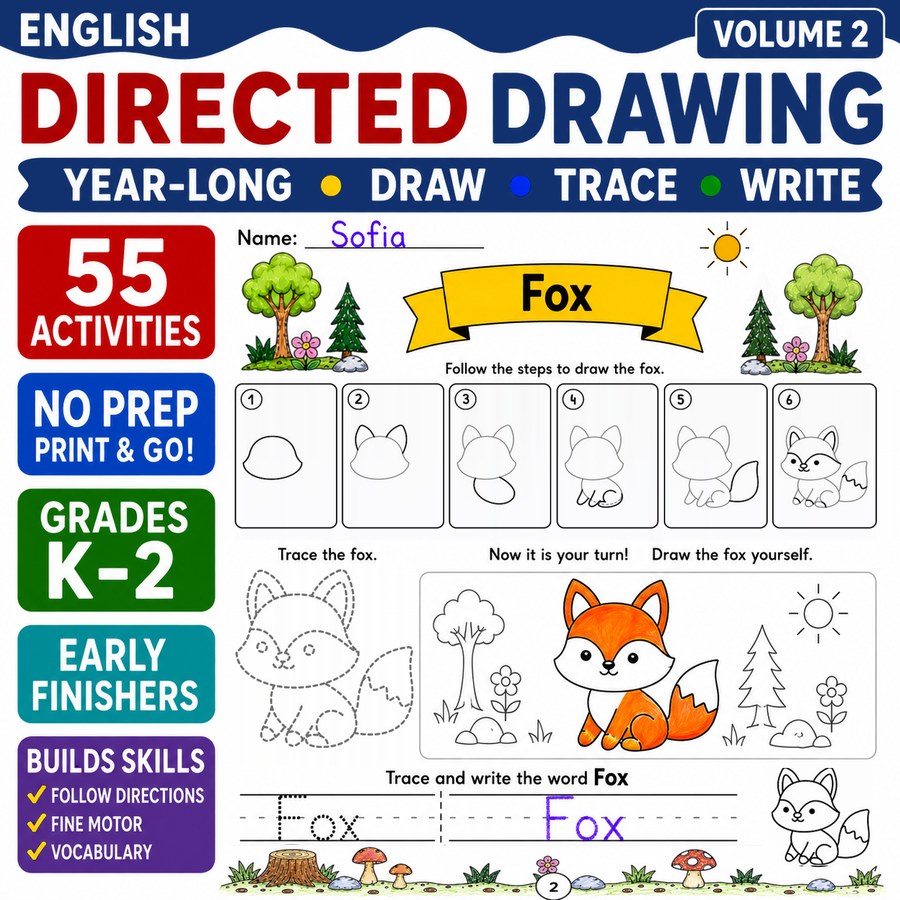
55 + 1 bonus · 112 worksheets
$5.99
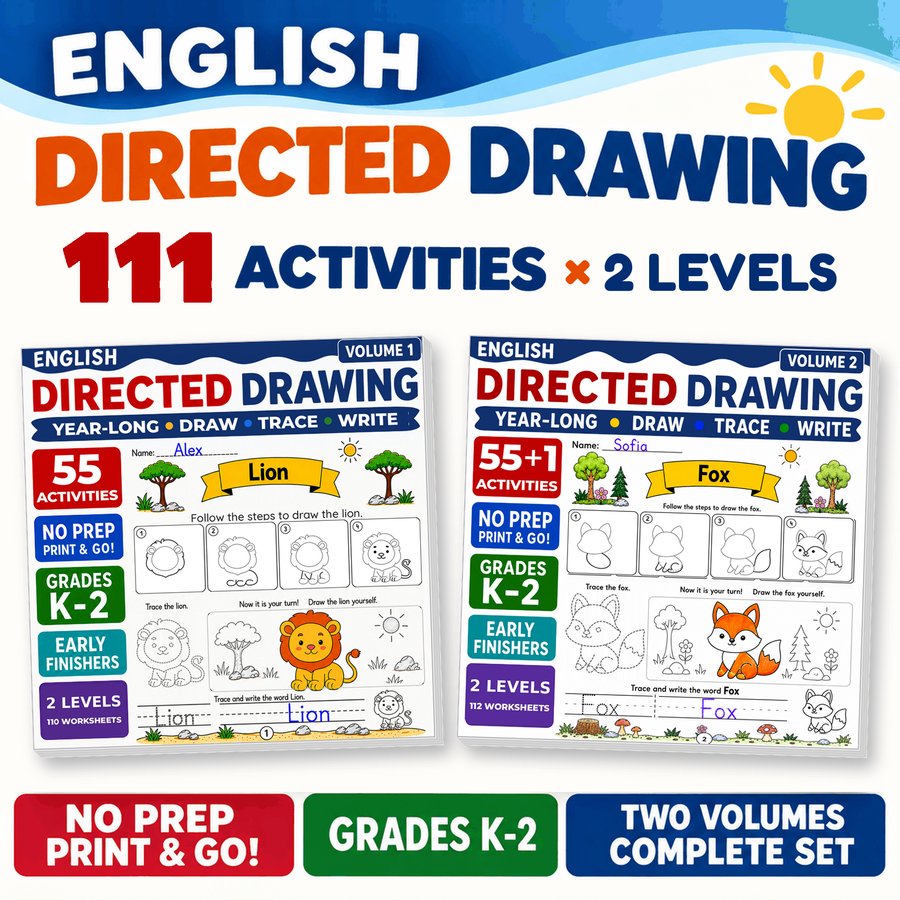
111 drawings · 222 worksheets
$9.98$11.98Save $2
Every word and direction on the student pages is in Spanish. Teacher page in English.
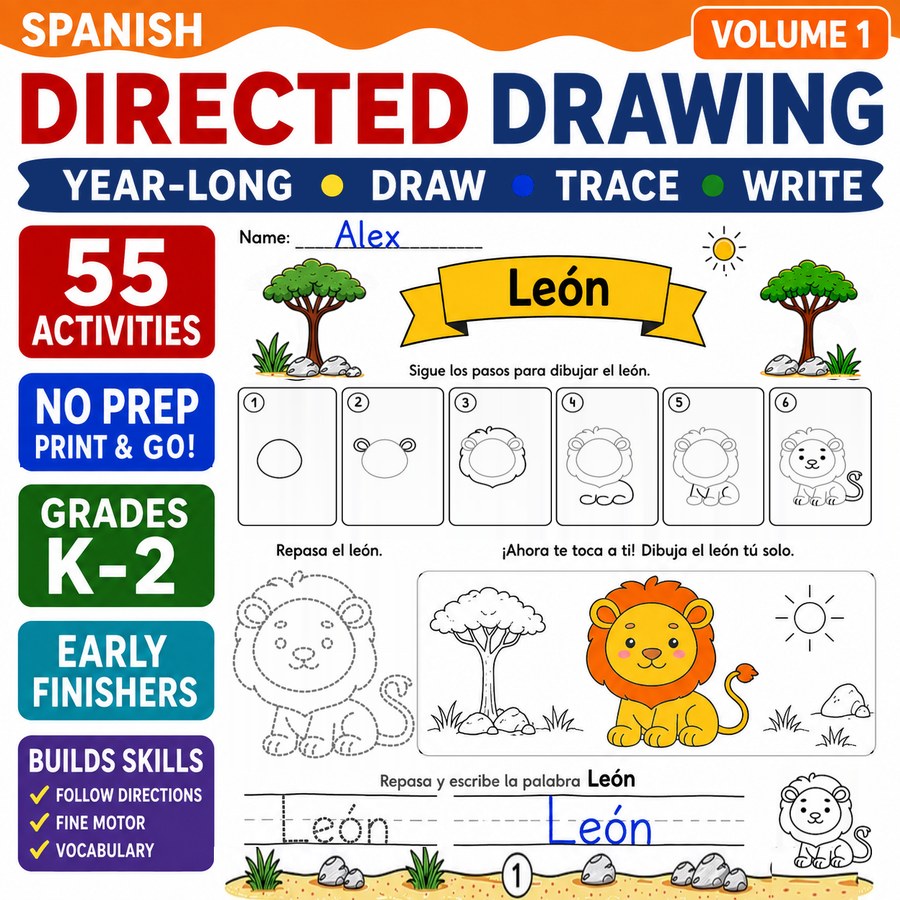
55 drawings · 110 worksheets
$5.99
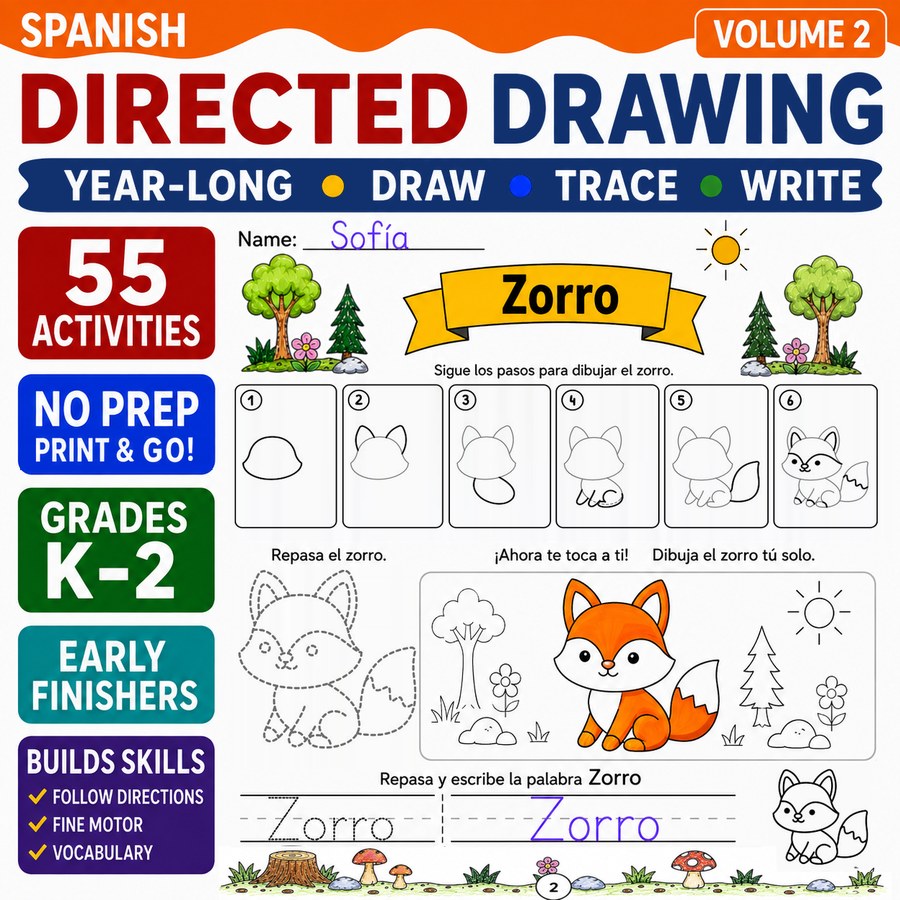
55 + 1 bonus · 112 worksheets
$5.99
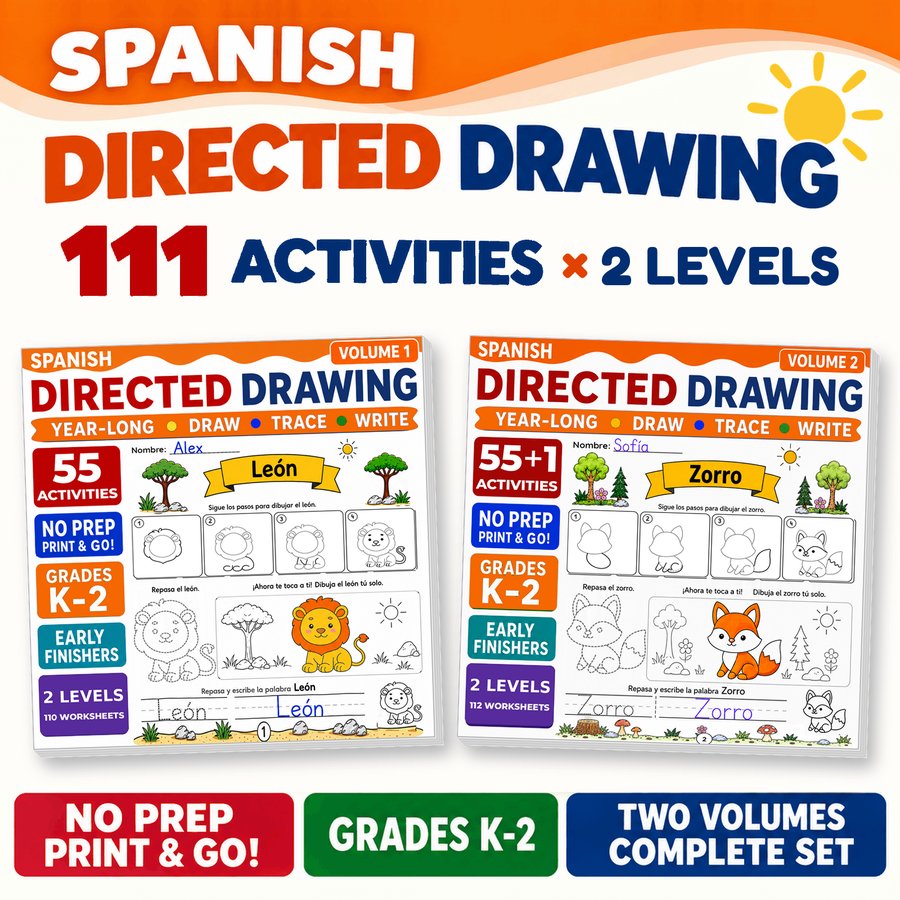
111 drawings · 222 worksheets
$9.98$11.98Save $2