
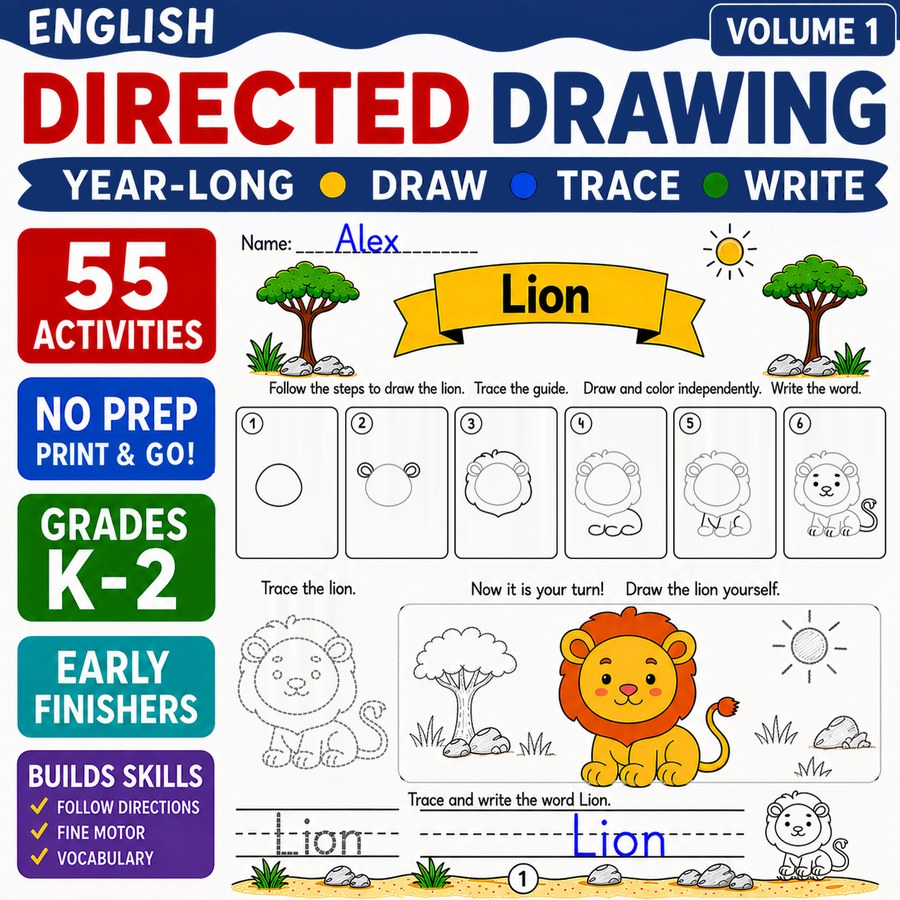
Volume 1
55 drawings · 110 worksheets
$5.99
Five places a single printed page earns its keep, and what makes a page work without an adult standing over it.
A no prep directed drawing page works as morning work, as an early finisher activity, in writing centers, in learning centers and in sub plans, for grades K-2. There is nothing to cut, glue or assemble: choose an activity, print it and hand it out. Because all four stages are printed on the sheet, a student can start and finish without an adult explaining anything once the routine is familiar.
Morning work has to survive the worst conditions in the school day. Students arrive at different times, half of them are still unpacking, and the teacher is taking attendance and talking to a parent at the door. Anything that needs an explanation fails.
A page whose instructions are pictures does not need one. A student who arrives at 8:05 and a student who arrives at 8:20 both start at step one and both produce a finished page. At home the same slot is morning basket or morning time, and the page behaves the same way.
The problem with early finishers is not filling time, it is filling it without creating a second lesson to manage. A page that ends in a hard stop sends the student back with nothing to do two minutes later.
Open space is left around each drawing on purpose. A student who finishes the four stages adds trees, grass, rocks or a sun and turns one figure into a scene. The small themed illustrations and the lettering on the page can be colored too. The work expands to fit the time available instead of running out.
In a center the page is the whole station: no cards to sort, no pieces to lose, no laminating. One printed sheet and a pencil. Because the page ends in a written word, it counts as literacy work rather than as something to keep hands busy.
Teachers running a rotation usually print one theme for the week so the center has a subject rather than a pile of unrelated animals.
Sub plans are written for someone who does not know the class. A page that explains itself in pictures is the safest thing to leave: the substitute hands it out, and the instructions are on the sheet rather than in a paragraph the substitute has to read aloud correctly.
The illustrated table of contents makes this easier. Every drawing in the book is shown with its page number, so a plan can say print page 24 rather than describe which animal to look for.
A no prep activity is one that goes from printer to student with nothing in between. These pages need no cutting, glue, laminating or assembly, and no materials beyond a pencil. Coloring is optional.
Yes. Morning work has to be startable by a student arriving alone, and the instructions on these pages are pictures rather than sentences. Students who arrive at different times all begin at step one and all finish a page.
Open space is left around the finished drawing on purpose, so a student can add a background of trees, grass, rocks or a sun and keep working independently. The themed illustrations and the lettering can also be colored. Nothing needs to be handed out a second time.
Yes, this is one of the common uses. The instructions are on the sheet, so the substitute only has to hand out the page. The illustrated table of contents lets a plan name a page number instead of describing the activity.
The full book holds 55 drawings, each at two levels, so 110 worksheets. Used once a week, that covers a school year with pages left over. Teachers who use them more often, as morning work several days a week, usually pair them with the themes they are already teaching.
The free sample is eight full activities, one from each theme, each at both levels. The full book is 55 drawings at two levels, 110 worksheets, with a teacher page.
Words and directions in English.
55 drawings · 110 worksheets
$5.99
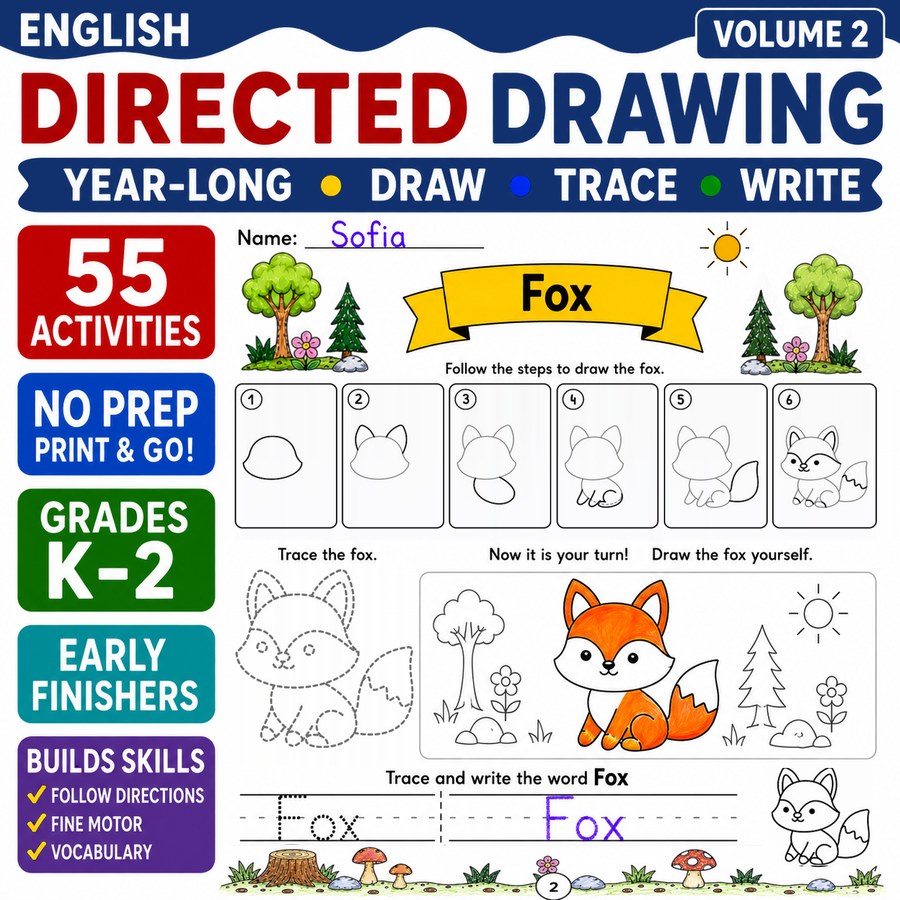
55 + 1 bonus · 112 worksheets
$5.99
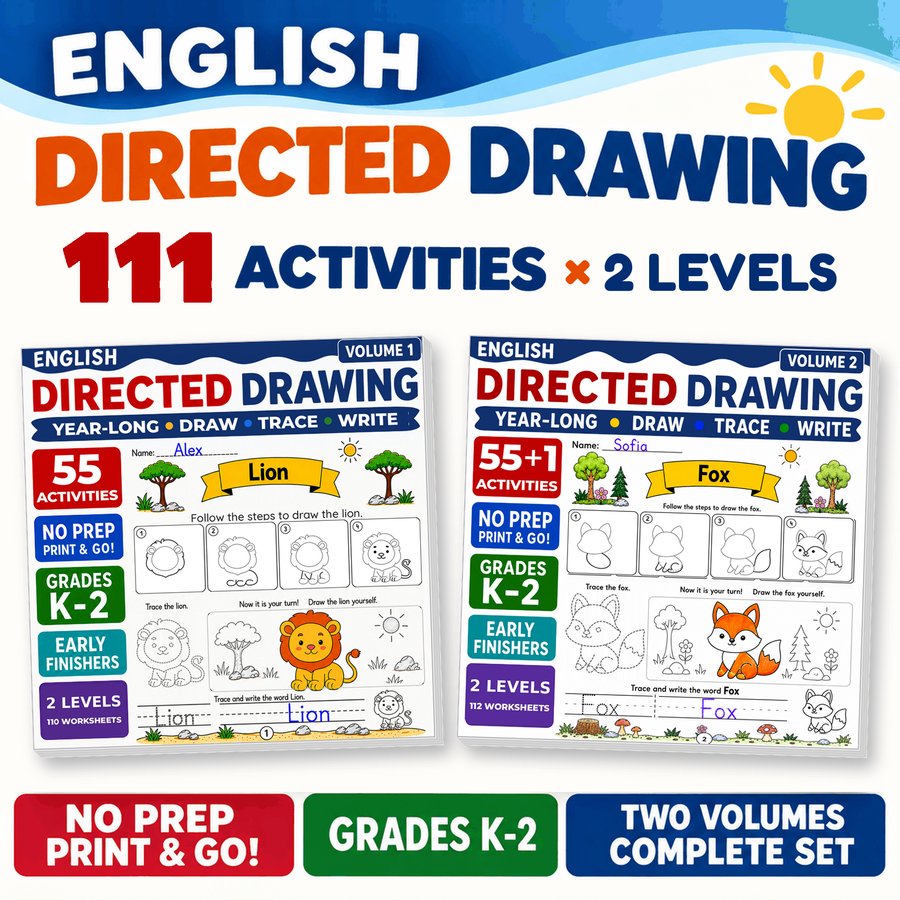
111 drawings · 222 worksheets
$9.98$11.98Save $2
Every word and direction on the student pages is in Spanish. Teacher page in English.
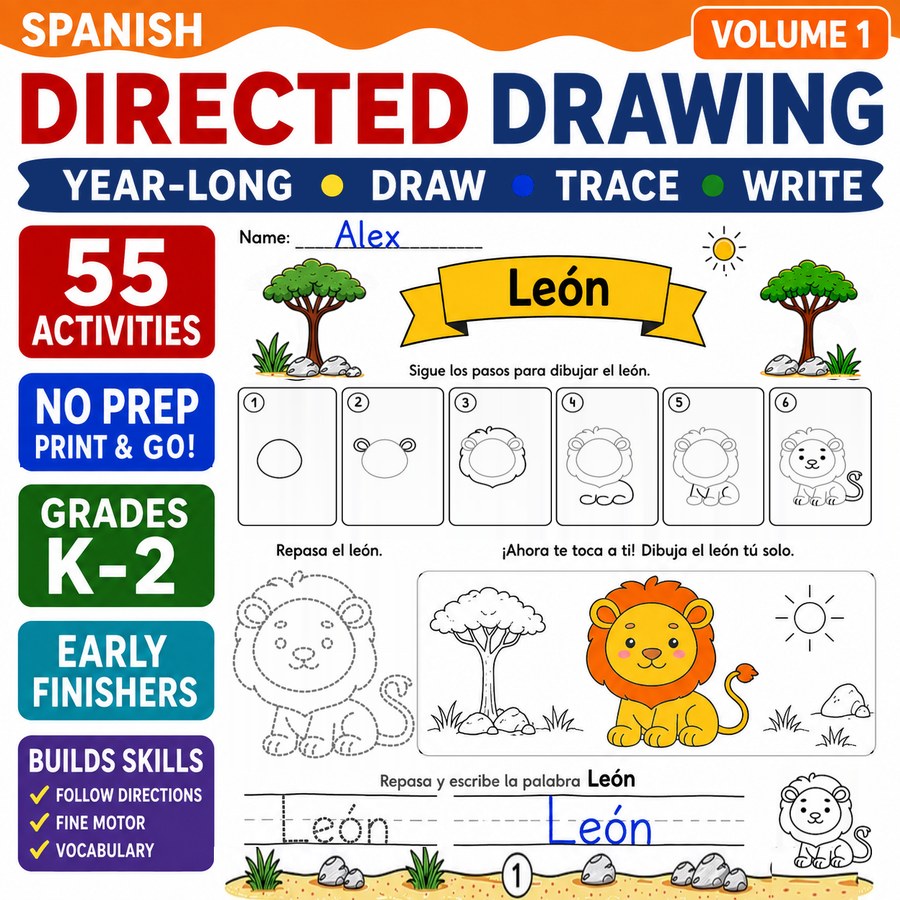
55 drawings · 110 worksheets
$5.99
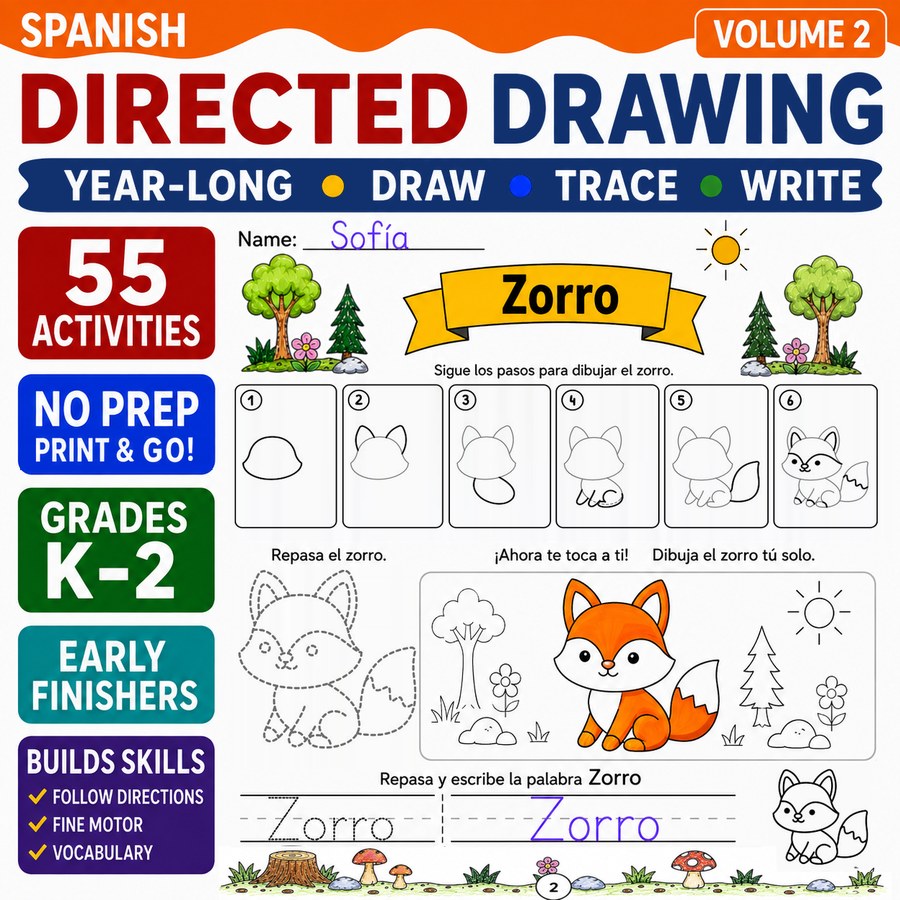
55 + 1 bonus · 112 worksheets
$5.99
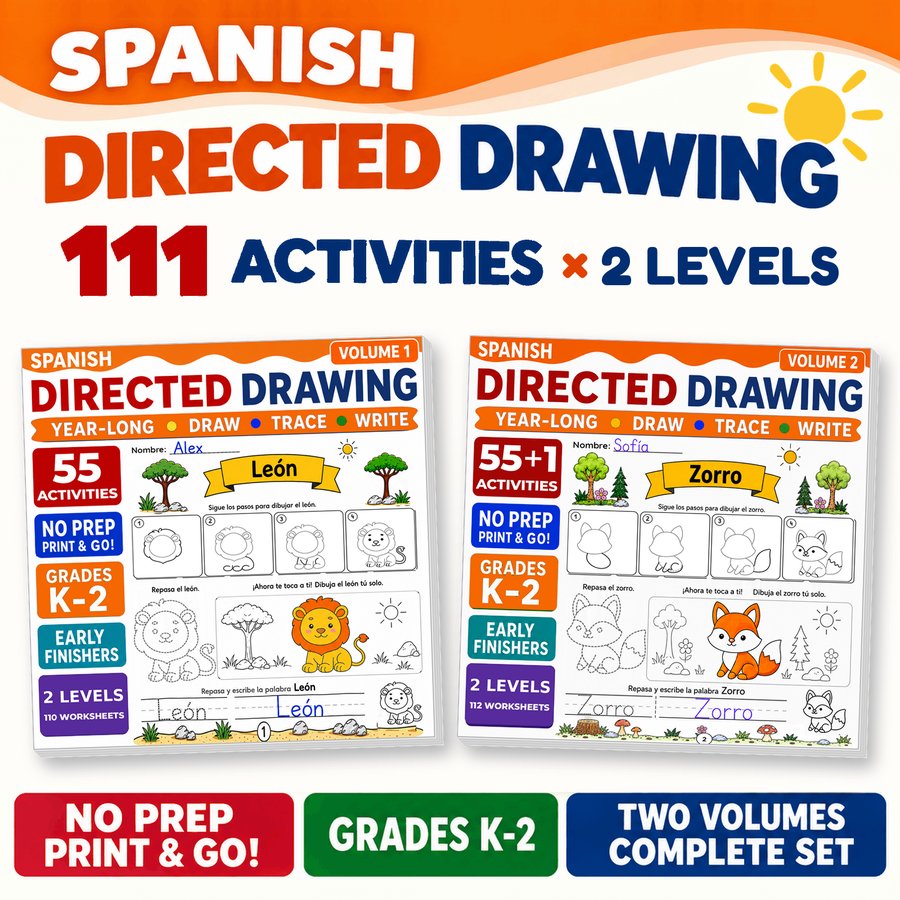
111 drawings · 222 worksheets
$9.98$11.98Save $2